
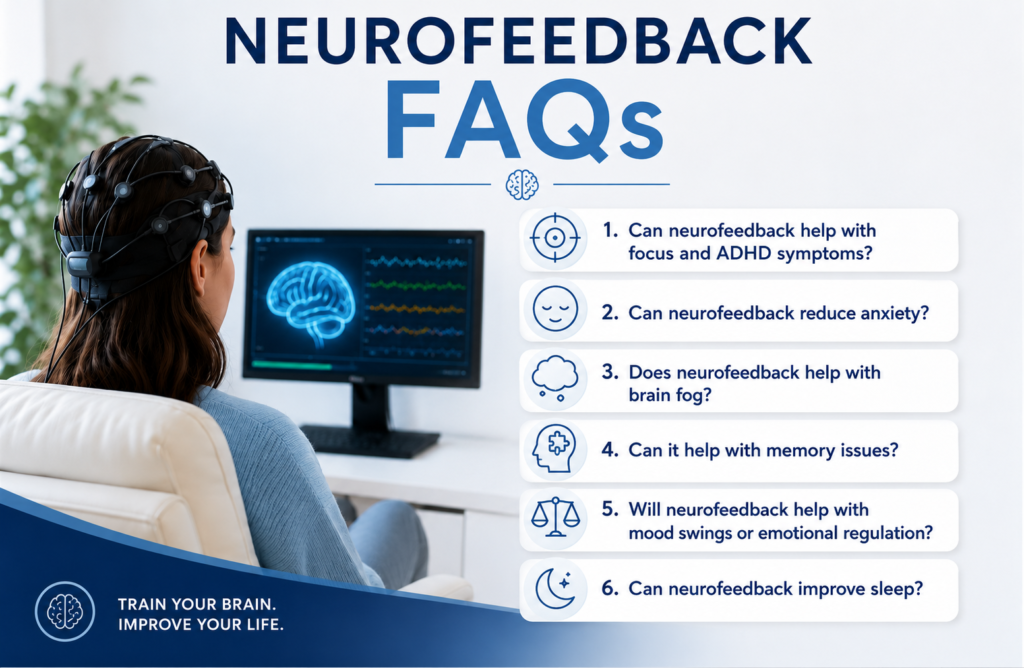
1. Can neurofeedback help with focus and ADHD symptoms?
Yes. Neurofeedback trains the brain to improve attention, reduce impulsivity, and increase mental clarity. Many patients experience better focus without relying solely on medication.
2. Can neurofeedback reduce anxiety?
Neurofeedback helps calm overactive brain patterns associated with anxiety. Over time, patients often feel more relaxed, less reactive, and better able to manage stress.
3. Does neurofeedback help with brain fog?
Yes. If you feel mentally slow, foggy, or unfocused, neurofeedback can help improve brain efficiency and processing speed—leading to clearer thinking.
4. Can it help with memory issues?
Neurofeedback supports better communication between brain regions, which can improve memory, recall, and cognitive performance over time.
5. Will neurofeedback help with mood swings or emotional regulation?
Yes. Neurofeedback helps stabilize brain activity, which can reduce emotional highs and lows and improve overall mood regulation.
6. Can neurofeedback improve sleep?
Many patients report better sleep after neurofeedback. By calming the brain, it becomes easier to fall asleep, stay asleep, and wake up feeling more rested.
7. What does neurofeedback feel like?
Neurofeedback is relaxing and non-invasive. You simply sit and watch a screen while sensors monitor your brain activity—your brain learns and adjusts in real time.
8. How long does it take to see results?
Some people notice changes within a few sessions, while others improve gradually over time. Consistency is key, and results build as the brain learns new patterns.
9. Is neurofeedback safe?
Yes. Neurofeedback is completely safe, drug-free, and non-invasive. It works by training your brain—not forcing or altering it.
10. How is neurofeedback different from therapy or medication?
Therapy works on thoughts and behaviors. Medication affects brain chemistry. Neurofeedback trains the brain directly—helping it function more efficiently at its core.
“Still wondering if neurofeedback is right for you?”
We start with brain mapping to understand exactly how your brain is functioning—then build a personalized plan designed for real, measurable improvement.