
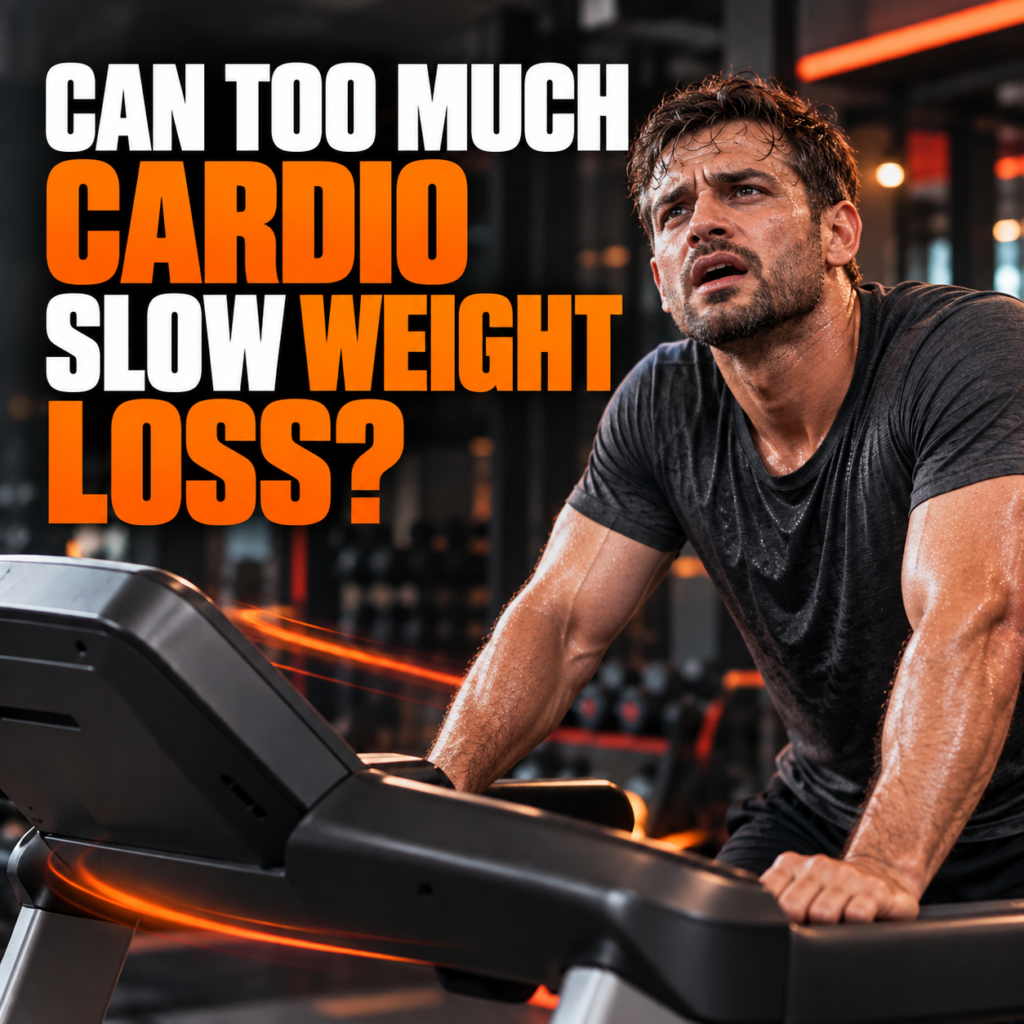
When weight loss is the goal, cardio often becomes the default prescription: run farther, cycle longer, add another class, burn more calories. If movement requires energy, then more movement should produce more fat loss. However, the physiology of weight loss is more nuanced.
Cardiovascular exercise can be an important part of a well-designed health and weight-management plan. It supports cardiovascular fitness, endurance, metabolic health, and overall physical capacity. The issue is not cardio itself. The issue is assuming that more cardio will always produce proportionally more fat loss or a better body-composition outcome.
For many people, particularly those actively losing weight, the more important question is not simply, “How many calories can I burn?” It is:
How can I reduce excess body fat while preserving the strength, lean tissue, and physical capacity I want to keep?
Can Too Much Cardio Slow Weight Loss?
Exercise contributes to energy expenditure and can support both weight loss and long-term health. However, increasing exercise volume indefinitely does not guarantee that weight will decline at the same rate.
Weight regulation is influenced by multiple variables, including nutritional intake, total daily activity, sleep, recovery, medications, health conditions, body composition, and individual physiological responses.
The National Institute of Diabetes and Digestive and Kidney Diseases emphasizes that successful weight management involves both sustainable nutrition and physical activity rather than exercise in isolation.
This is where the phrase “more cardio equals more fat loss” becomes too simplistic. If progressively adding cardio leaves you excessively fatigued, interferes with resistance training, increases discomfort, or creates an exercise routine you cannot realistically maintain, doing more may not be the most intelligent strategy.
The objective is not to accumulate the maximum possible amount of exercise. It is to create an appropriate amount of purposeful movement that your body can recover from and sustain.
Weight Loss and Fat Loss Are Not the Same Thing
During a calorie deficit, weight loss can include reductions in both fat mass and fat-free mass, including skeletal muscle. Lean tissue contributes to strength, physical function, mobility, resilience, and healthy aging. Losing weight while unnecessarily sacrificing substantial amounts of lean mass may therefore be very different from improving body composition while preserving strength. This is one reason a sophisticated weight-management strategy should look beyond total pounds lost.
A systematic review and meta-analysis of adults with overweight or obesity found that adding resistance exercise during diet-induced weight loss helped attenuate losses of fat-free mass while improving strength and supporting greater reductions in fat mass compared with dietary weight loss alone.
Another large systematic review found that resistance-based exercise, particularly when incorporated into a comprehensive weight-management program, can meaningfully improve body composition. The goal, therefore, should not necessarily be to make the scale move as quickly as possible.
How to Lose Fat Without Losing Muscle
Preserving lean mass during weight loss generally requires a more considered approach than simply increasing calorie expenditure.
Resistance Training Deserves a Central Role
Cardio develops cardiovascular endurance. Resistance training provides a different stimulus: it challenges muscle tissue to maintain strength and function.
A 2025 systematic review found that resistance exercise during dietary weight loss helped protect fat-free mass and improve muscular strength. More recent research examining calorie restriction alongside different forms of exercise has similarly found that exercise can reduce the amount of fat-free mass lost during weight reduction.
Resistance exercise can be individualized according to age, experience, mobility, health history, previous injuries, and current physical capacity.
Nutrition Has to Support the Objective
Exercise cannot compensate indefinitely for a poorly structured nutrition strategy. Likewise, an aggressive calorie deficit may produce a lower scale weight without necessarily producing the body-composition outcome a patient wants.
Adequate nutrition provides the energy and nutrients required to support daily function, exercise, recovery, and muscle tissue. Protein intake can be particularly relevant during periods of calorie restriction, although individual requirements vary according to body size, age, medical status, activity level, and overall dietary intake.
This is why responsible weight management should consider nutrition and exercise together rather than treating them as separate conversations.
Recovery Is Part of the Program
Recovery is sometimes treated as the absence of training but in reality, it is part of training. Exercise creates a physiological demand. The body then needs sufficient opportunity to adapt to that demand.
When training volume continually increases without adequate recovery, performance can deteriorate and fatigue can accumulate. For some individuals, that can make consistency increasingly difficult. A more intelligent approach considers the complete picture: exercise intensity, frequency, nutrition, sleep, stress, physical limitations, and how the person is responding over time.
That philosophy aligns with current public-health guidance. The CDC’s physical activity recommendations for adults include both aerobic activity and muscle-strengthening activity, rather than presenting cardiovascular exercise as the sole form of movement adults need.
For most healthy adults, current guidance includes at least 150 minutes of moderate-intensity aerobic activity each week alongside muscle-strengthening activity on two or more days. Individual recommendations may differ depending on health conditions, physical capacity, and clinical guidance.
What If Pain or Limited Mobility Makes Exercise Difficult?
Back discomfort, joint pain, restricted mobility, poor movement patterns, deconditioning, or a previous injury can make consistent exercise uncomfortable or difficult. Simply telling someone to exercise harder does not address those barriers.
In these situations, the first objective may be improving the person’s capacity to move safely and comfortably. A clinically guided rehabilitation program can assess relevant limitations and progressively rebuild mobility, stability, strength, and confidence where appropriate.
For certain patients, chiropractic care or other musculoskeletal care may also form part of a broader plan for addressing mechanical complaints or movement limitations. It should not be positioned as a weight-loss treatment itself. Rather, where clinically appropriate, addressing a physical barrier to movement may help a patient participate more consistently in the activity and rehabilitation that support broader health goals.
How Much Cardio Should You Do for Weight Loss?
The right amount depends on your current fitness level, health history, goals, nutrition, resistance-training program, recovery capacity, mobility, and other medical considerations. General physical-activity recommendations provide a useful foundation, but they are not an individualized prescription.
If you can recover well, remain consistent, maintain appropriate nutrition, continue strength training, and progress toward your health goals, cardio can be an extremely valuable part of the plan.
If your routine continually leaves you exhausted, painful, unable to recover, or progressively less capable of performing the strength work and daily movement that matter to you, the answer may not be another hour on the treadmill.
Does Cardio Cause Muscle Loss?
Cardio does not automatically cause muscle loss. Muscle preservation during weight loss is influenced by the complete environment surrounding the individual. It includes the magnitude of the calorie deficit, resistance-training stimulus, nutritional intake, training volume, health status, and recovery.
Research consistently supports exercise during weight loss, with resistance training playing a particularly important role in maintaining fat-free mass.
Is Strength Training Better Than Cardio for Fat Loss?
Aerobic exercise supports cardiovascular fitness and contributes to energy expenditure. Resistance training supports muscular strength and helps preserve lean mass. A comprehensive program may incorporate both.
An overview of systematic reviews evaluating exercise in adults with overweight or obesity found beneficial effects of exercise on weight, fat mass, and visceral fat, while resistance training helped reduce lean-mass loss during weight reduction.
The Whole Truth About Cardio and Weight Loss
The myth: The more cardio you do, the more body fat you will lose.
The Whole Truth: Effective movement is not maximum movement.
Cardio can be highly beneficial. But sustainable body-composition improvement involves more than trying to burn the greatest possible number of calories. It requires an intelligent balance between movement, resistance training, nutrition, recovery, and the individual needs of the person doing the work.
For someone navigating weight loss, preserving strength should not be an afterthought. And for someone dealing with pain, mobility restrictions, or previous injuries, improving the ability to move may need to come before simply increasing how much they move.
A Smarter Approach to Fat Loss Starts With Better Movement
A comprehensive medical weight loss program should look beyond the number on the scale and consider body composition, strength, mobility, recovery, and long-term metabolic health. The most effective approach is one designed around the individual. Through personalized weight management, your health history, goals, movement capacity, nutrition, and progress can all be considered when developing a sustainable strategy.
Ready to move smarter, preserve your strength, and take a more personalized approach to weight loss?
Schedule a visit with our team to explore a plan designed around your health, movement needs, and long-term goals.