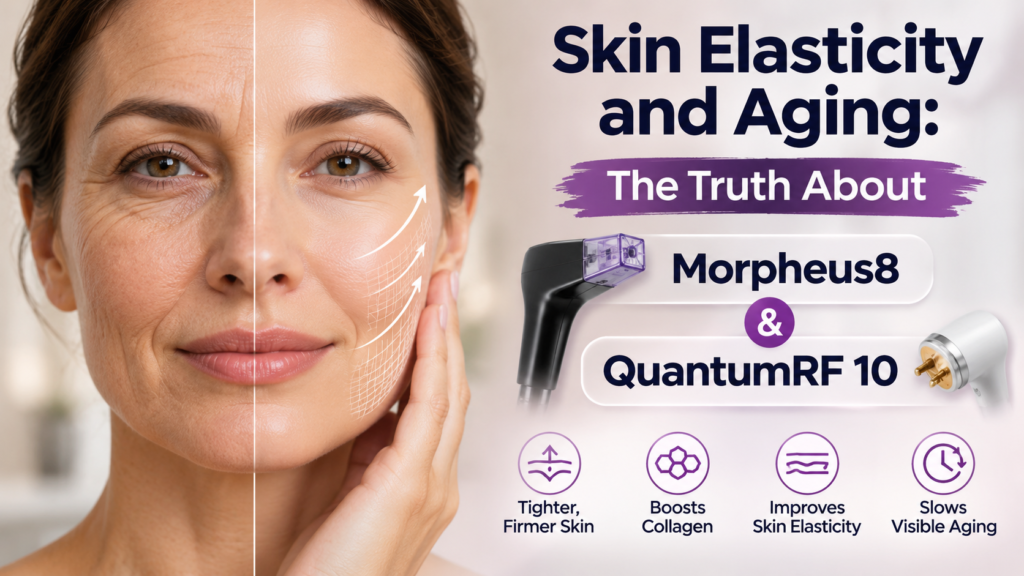
Have you noticed that your skin doesn’t feel quite as firm as it once did? Maybe fine lines are becoming more noticeable, your skin feels less resilient, or you’re seeing changes around your jawline and neck. These changes are a natural part of aging but understanding why they happen can help you make more informed decisions about your skin. With so many aesthetic treatments promising tighter, smoother, or younger-looking skin, it’s easy to wonder which options are worth considering.
Here’s the Whole Truth: Skin aging is influenced by several factors, and no single treatment can stop or reverse the aging process.
Technologies such as Morpheus8 and QuantumRF 10 use radiofrequency energy in different ways to address selected skin and tissue concerns. But they aren’t interchangeable, and neither is appropriate for everyone. At The Wellness Center Health & Therapy, our Whole-istic Care™ approach begins with understanding your concerns, goals, and health history before discussing whether an aesthetic treatment may be appropriate.
Let’s explore what affects skin elasticity, how these technologies differ, and what you should know before considering treatment.
What Is Skin Elasticity, and Why Does It Change With Age?
Skin elasticity refers to your skin’s ability to stretch and return toward its original shape. Two important proteins help support the skin’s structure:
- Collagen: Helps provide strength and structural support.
- Elastin: Helps the skin stretch and return toward its original position.
As we age, changes in collagen, elastin, and other components of the skin can affect firmness, texture, and resilience. These changes don’t happen at the same pace for everyone.
What Factors Affect Skin Elasticity?
Several factors may influence how your skin changes over time.
Natural aging
Over time, the skin undergoes changes in its structure and ability to maintain firmness. The appearance of fine lines, wrinkles, and skin laxity may gradually become more noticeable.
Sun exposure
Repeated ultraviolet exposure can contribute to changes in collagen and elastin, accelerating visible signs of skin aging.
Hormonal changes
Hormonal changes, including those associated with menopause, may influence skin thickness, moisture, and elasticity.
Lifestyle and overall health
Smoking, nutrition, sleep habits, and certain health conditions can also affect skin health and appearance. All these factors vary from person to person, the most appropriate approach to skin concerns may also differ.
Can Radiofrequency Treatments Improve the Appearance of Aging Skin?
Radiofrequency, or RF, technology uses electrical energy to generate controlled heat in targeted tissue. Depending on the device, treatment method, and intended use, this energy may produce tissue changes associated with a firmer or smoother appearance. Some RF-based procedures are designed to address skin texture and wrinkles. Others target tissue at different depths. However, not all radiofrequency treatments work the same way or produce the same results.
The technology used, treatment area, skin characteristics, and individual health considerations all matter. That’s why understanding the difference between Morpheus8 and QuantumRF 10 is important.
What Is Morpheus8, and How Does It Work?
Morpheus8 is a radiofrequency microneedling technology that combines small needles with RF energy. During treatment, the needles enter the skin and deliver radiofrequency energy at selected depths. The controlled treatment process is intended to produce changes in tissue that may improve the appearance of certain skin concerns.
What Skin Concerns May Morpheus8 Address?
Depending on the specific device configuration, treatment indication, and patient, Morpheus8 may be considered for concerns such as:
- Fine lines and wrinkles
- Uneven skin texture
- Certain types of acne scarring
- Selected areas of skin laxity
- Other concerns evaluated by a qualified provider
Morpheus8 is not a substitute for every type of skin-tightening procedure, and results can vary. The number of sessions, recovery experience, and degree of improvement depend on the individual and treatment plan.
Is Morpheus8 Right for Everyone?
Definitely not, there are certain medical conditions, medications, active skin concerns, or other factors may affect whether RF microneedling is appropriate. Your provider should discuss the anticipated benefits, limitations, possible side effects, and alternative options before treatment. The goal is to understand whether Morpheus8 is suitable for your particular skin concerns, not to assume it is the right choice simply because it is popular.
What Is QuantumRF 10?
QuantumRF 10 is a radiofrequency-based treatment technology used to deliver energy into targeted tissue through a specialized applicator. Unlike Morpheus8’s microneedling approach, QuantumRF 10 is designed for a different method of RF energy delivery. It is associated with minimally invasive treatment techniques rather than conventional surface microneedling. All these procedures involve different methods of reaching and heating tissue, their intended uses, recovery considerations, and risk profiles can differ.
What Concerns May QuantumRF 10 Address?
Depending on the device’s authorized indications and the patient’s individual needs, a provider may consider QuantumRF technology when discussing selected tissue-tightening or contouring concerns.
However, the suitability of QuantumRF 10 depends on factors such as the treatment area, tissue characteristics, medical history, and the specific procedure being considered. It should not be described as a universal solution for loose skin or aging-related changes.
Is QuantumRF 10 the Same as Morpheus8?
No, both involve radiofrequency energy, but they differ in how that energy is delivered. Morpheus8 uses an RF microneedling approach, while QuantumRF 10 uses a minimally invasive RF applicator. That distinction matters because two technologies using the same type of energy do not necessarily have the same benefits, risks, or recovery requirements. A provider-guided consultation can help clarify which options, if any, are relevant to your goals.
Morpheus8 vs. QuantumRF 10: What’s the Difference?
When comparing aesthetic treatments, it’s helpful to look beyond the technology name.
| Feature | Morpheus8 | QuantumRF 10 |
| Technology | Radiofrequency microneedling | Minimally invasive radiofrequency |
| Energy delivery | Through microneedles placed into the skin | Through a specialized RF applicator positioned in targeted tissue |
| General focus | Selected skin texture, wrinkle, and laxity concerns | Selected tissue-tightening and contouring concerns |
| Treatment planning | Depends on skin concerns and treatment settings | Depends on treatment area, tissue characteristics, and procedure |
| Recovery | Varies by treatment depth and individual response | Varies by procedure and individual response |
| Best candidate | Determined through clinical evaluation | Determined through clinical evaluation |
Neither technology is automatically better and the more useful question is whether a particular procedure has an appropriate indication, a reasonable expected benefit, and an acceptable risk profile for you. Through Luxora, The Wellness Center’s aesthetic care experience, we take a personalized approach to skin concerns, helping you explore options such as Morpheus8 and QuantumRF 10 based on your individual goals and needs.
What Are the Risks of Morpheus8 and QuantumRF 10?
Radiofrequency aesthetic procedures are medical treatments, and understanding potential risks is an important part of informed decision-making. Depending on the procedure, possible effects may include discomfort, swelling, bruising, redness, and temporary skin sensitivity.
More significant complications can occur. For RF microneedling specifically, the U.S. Food and Drug Administration has reported serious complications with certain uses, including burns, scarring, fat loss, nerve damage, and other injuries.
You can read the FDA’s safety communication on radiofrequency microneedling for more information. QuantumRF 10 has a different delivery method, so its risks should be discussed separately rather than assuming the RF microneedling safety profile applies in exactly the same way.
Why Provider Experience Matters
Before considering treatment, ask about:
- The specific device and procedure being recommended
- Whether the proposed use is within the device’s authorized indications
- Your provider’s training and experience
- Potential complications and contraindications
- Expected recovery and aftercare
- Realistic results and possible limitations
- Other treatment options that may be appropriate
An individualized discussion helps you understand both the potential benefits and the uncertainties before making a decision.
What Results Can You Realistically Expect?
Aesthetic treatments are often promoted using dramatic before-and-after images. But individual outcomes are influenced by many factors, including skin condition, age, treatment area, procedure settings, and healing response. Some people may experience improvements in the appearance of firmness or texture following an appropriate procedure.
Others may notice more modest changes or may not achieve the result they hoped for. Results are not guaranteed, and improvements may not be permanent.
Can These Treatments Restore Lost Collagen?
RF-based treatments are intended to produce tissue responses that may include collagen remodeling. However, that doesn’t mean treatment restores skin to its younger state or reverses the biological aging process. The degree and durability of any visible improvement vary.
Will One Treatment Be Enough?
Not necessarily. The number of treatments, if any, depends on the specific procedure and your individual goals. Morpheus8 and QuantumRF 10 should not be assumed to require the same number of sessions or follow the same recovery schedule. Your provider can discuss what may be reasonable for the treatment being considered.
Why Skin Health Deserves a Whole-istic Care™ Approach
Your skin is part of your overall health. Hormonal changes, sun exposure, lifestyle factors, medical conditions, and natural aging may all influence its appearance. That’s why a conversation about skin elasticity shouldn’t begin and end with choosing a device.
At The Wellness Center Health & Therapy, our Whole-istic Care™ approach considers your health history, goals, and the different factors that may be connected to your concerns. If you’re exploring Morpheus8 or QuantumRF 10, an individualized consultation may include discussing:
- The skin changes you’ve noticed
- What you hope to improve
- Your previous aesthetic treatments
- Your medical history and current medications
- Your skin’s characteristics and treatment suitability
- The potential benefits, risks, and limitations of each option
In some cases, an aesthetic procedure may be appropriate.
In others, a different approach or choosing not to undergo a procedure, may be the better decision. Care for the whole you mean making room for your questions, your preferences, and your comfort with the treatment plan.
How Can You Support Skin Elasticity as You Age?
Aesthetic procedures are only one part of caring for your skin. Everyday habits also play an important role in maintaining skin health.
· Protect Your Skin From Sun Exposure : – Regular sun protection can help reduce UV-related skin damage. Protective clothing, shade, and appropriate sunscreen use are important parts of a skin-care routine.
· Support Your Overall Health: – Adequate nutrition, hydration, sleep, and avoiding smoking can support general health and skin well-being. These habits won’t stop aging, but they remain worthwhile whether or not you pursue an aesthetic treatment.
· Choose Skin Care That Fits Your Needs: – Different skin types and concerns may benefit from different skin-care routines. A qualified provider can help you consider suitable products and whether certain ingredients may be helpful or irritating.
· Keep Expectations Realistic: – Skin naturally changes with age and goal of aesthetic care doesn’t have to be looking younger at any cost. It can simply be feeling informed and comfortable with the choices you make about your appearance.
Your Skin Changes. Your Care Should Be Personal.
Changes in skin elasticity are a natural part of aging, but your experience is unique. Morpheus8 and QuantumRF 10 offer different approaches to selected skin and tissue concerns. Understanding their differences, possible benefits, and risks can help you make a more informed decision.
At The Wellness Center Health & Therapy, we believe aesthetic treatments should begin with listening to your goals and considering the whole person, not simply recommending a procedure. Whether you’re noticing early changes in skin firmness or exploring options for more visible concerns, we’re here to help you understand what may be appropriate for you.
Let’s talk about what you’ve been experiencing and find the next right step for your care. Schedule a Visit at The Wellness Center
Frequently Asked Questions About Morpheus8 and QuantumRF 10
Does Morpheus8 Tighten Loose Skin?
Morpheus8 may improve the appearance of selected skin laxity concerns in appropriate patients. The degree of improvement varies, and it is not a replacement for every surgical or nonsurgical option.
Is QuantumRF 10 Better Than Morpheus8?
Not necessarily. The two technologies use different methods of radiofrequency delivery. The most appropriate choice depends on the treatment goal, clinical indication, risks, and individual assessment.
Are Morpheus8 and QuantumRF 10 Painful?
Discomfort can vary depending on the procedure and treatment area. Your provider should explain the approach to comfort management and what sensations to expect.
How Long Does Recovery Take?
Recovery varies by device, treatment settings, and individual response. Morpheus8 and QuantumRF 10 may involve different aftercare needs, so ask for procedure-specific instructions.
Can These Treatments Stop Skin Aging?
No. They may address certain visible skin concerns, but they do not stop natural aging or prevent future changes in skin elasticity.